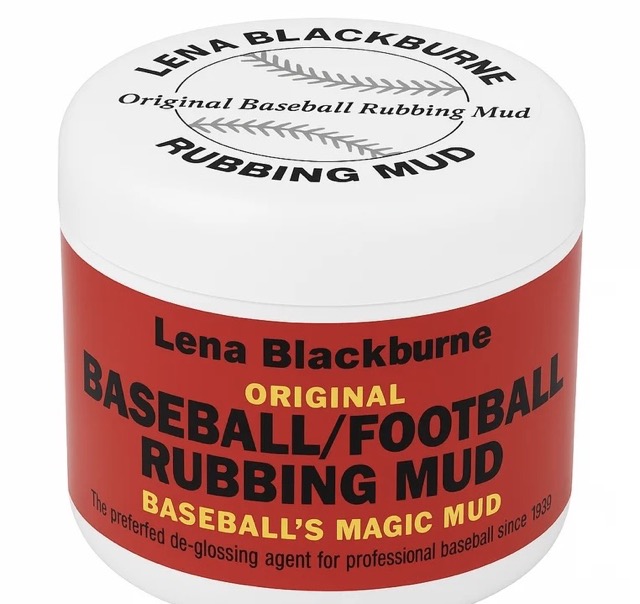
If there's one material that defines a football prep, it's the mud. It's the first thing that touches the leather, it does the heaviest lifting, and it's the step most people get wrong. At Sam's Footballs, there's only one mud we use: Lena Blackburne Original Rubbing Mud. Here's why.
What Mud Actually Does
Every new leather football ships coated in factory wax. That wax protects the ball in the box, but it fills in the pebbled grain — the tiny bumps your fingertips lock onto when you throw. Mud is a very fine abrasive. Worked into the leather by hand, it takes the wax off and opens the grain back up without damaging the surface. (More on that in Why New Footballs Feel Slippery.)
That word "fine" is the whole game. Too coarse and the mud scratches the leather and wears down the pebbling you're trying to save. Too inconsistent and one panel ends up grippy while the next one stays slick.
Why Lena Blackburne
Lena Blackburne Original Rubbing Mud has been the official rubbing mud of Major League Baseball for more than 80 years. Before every big-league game, umpires' attendants rub it into every new baseball to knock the shine off the leather so pitchers can grip it. It's the same problem we're solving on a football: slick, factory-finished leather that needs real grip without being damaged.
The mud is collected from one closely guarded spot along a tributary of the Delaware River, and it's known for an unusually fine, smooth texture. Football equipment managers picked up on it for the same reasons baseball did: it takes the shine off, it doesn't scar the leather, and it behaves the same way jar after jar.
What We Don't Use
You'll see a lot of alternatives out there. We don't use any of them:
- Backyard dirt or garden soil. It's full of grit, sand, and small stones that scratch leather, and every scoop is different.
- Generic "football mud" with no track record. If we don't know how it behaves on game-ball leather, it doesn't go on yours.
- Sandpaper or scuff pads. They'll take wax off fast, along with the pebbling. Once the grain is sanded flat, it's gone for good.
Saving a few dollars on mud isn't worth risking a $100+ game ball. We'd rather pay for the real thing.
Mud Is Step One, Not the Whole Job
A lot of people buy a jar of mud, rub it on, wipe it off, and call the ball prepped. That's not a prep. At Sam's, the mud is worked into every panel until the factory wax is gone, left to dry, and then brushed in with a horsehair brush — not wiped off. After that comes Wilson conditioner to put the oils back. Mud on its own leaves leather thirsty, and the conditioner preserves it so the ball never dries out. Last is a Wilson wax bar to seal it all in. Then every ball gets a hand grip test before it ships. See the full lineup in Name-Brand Materials Only.
Get the Real Thing
Every Sam's football is hand-mudded with authentic Lena Blackburne rubbing mud, then brushed, conditioned, and sealed.
Shop Fully Prepped Footballs